
Our services
Manual Therapy
Reviewed by Andrew Macdonald, Senior Physiotherapist , AHPRA registered (PHY0002098797), APA member
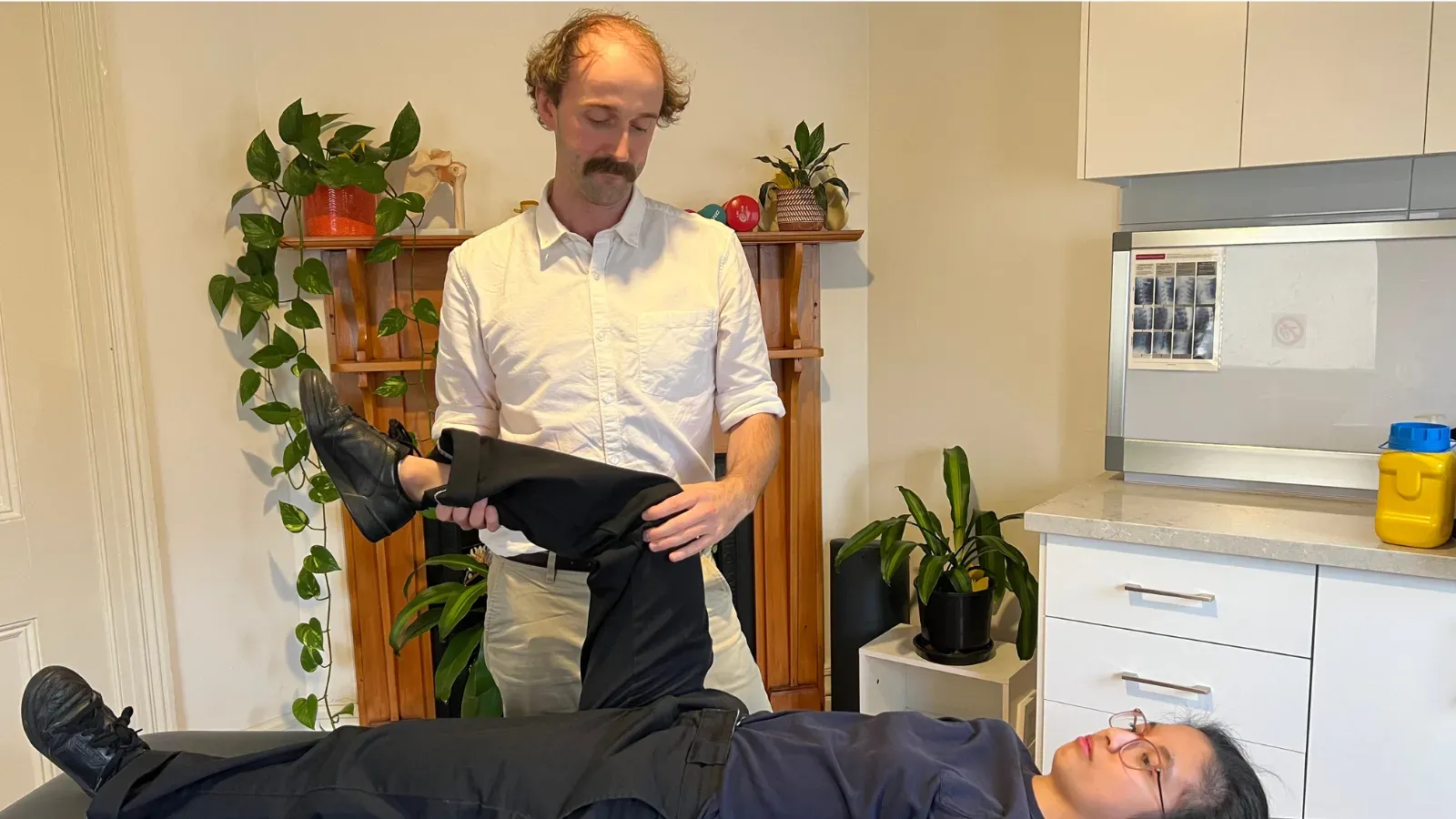
What is Manual Therapy?
Manual therapy is the umbrella term for the hands-on techniques Andrew uses to assess and treat muscles, joints and soft tissue. It covers several distinct approaches: deep soft tissue work to release tight, restricted muscle; trigger point therapy targeting specific tight, irritable bands within a muscle; joint mobilisation to restore normal joint movement and reduce stiffness; and fascia distortion release technique, a targeted approach addressing specific patterns of restriction within the fascia, the connective tissue that surrounds and links muscles throughout the body. Which techniques are used, and where, depends entirely on what Andrew finds during his assessment of your specific problem.
How It Works
Each manual therapy technique works through a slightly different mechanism, and Andrew selects and combines them based on what your tissue needs. Soft tissue work applies sustained or rhythmic pressure to muscle and connective tissue, which can increase local blood flow, ease restrictions between tissue layers, and decrease the heightened muscle tension that often accompanies pain. Trigger point therapy applies direct, sustained pressure to a specific tight band within a muscle, which is thought to interrupt the local contraction and improve blood flow to the area, similar in principle to dry needling, but delivered through pressure rather than a needle.
Joint mobilisation involves passively moving a joint through its range, including small accessory movements that can’t be produced through active movement alone. This can help restore normal joint mechanics where stiffness has developed, and also has a direct neurophysiological effect, stimulating joint receptors in a way that can reduce the perception of pain and ease protective muscle guarding around the joint. Fascia distortion release technique is based on the idea that specific, recognisable patterns of fascial restriction contribute to pain and limited movement, and uses targeted manual pressure and movement to address them directly.
What It Helps With
Manual therapy is a core part of treatment for most of the musculoskeletal conditions Andrew sees. It’s commonly used for neck pain and headaches and migraines that originate from tight, restricted muscles and joints in the neck and upper back, for restoring joint mobility in conditions like frozen shoulder, and for easing referred nerve pain associated with sciatica. It’s also a key part of managing runner’s knee and other overuse conditions where surrounding muscle tightness contributes to joint loading, and is often used for jaw pain and restriction associated with TMJ dysfunction.
It’s rarely used in isolation for these conditions. Andrew typically combines manual therapy with dry needling to address deeper trigger points, and with an exercise rehabilitation programme so the improvements in mobility and pain are supported by lasting strength and control, rather than relying on hands-on treatment alone.
Manual Therapy vs Massage
Manual therapy and relaxation massage can look superficially similar, both are hands-on and involve pressure applied to muscle and soft tissue, but the purpose and process are different. Manual therapy begins with a clinical assessment to identify which specific joints, muscles or fascial restrictions are contributing to your problem, and treatment is directed specifically at those structures, often combined with dry needling, exercise or electrotherapy as part of a broader plan. It’s problem-focused and outcome-driven, rather than a general, whole-body relaxation treatment, though it can certainly feel relaxing as tight tissue releases.
What to Expect During a Session
Andrew will first assess your movement, posture and the specific area of concern to identify which structures are contributing to your pain or stiffness. Treatment is then matched to what he finds, this might mean firm, targeted soft tissue work over a specific muscle, gentler rhythmic joint mobilisation, or precise pressure over a fascial restriction. Some techniques can feel firm or momentarily uncomfortable, particularly over tight or irritated tissue, but treatment shouldn’t leave you in significant pain, and Andrew will adjust pressure and technique based on how your body responds throughout.
Aftercare
Mild soreness for a day or so afterward is a common response to manual therapy, particularly after firmer soft tissue work, and generally settles on its own. Gentle movement of the treated area, staying hydrated and avoiding strenuous activity on the treated region on the day of treatment all support recovery. Andrew will let you know if your particular treatment warrants any specific aftercare advice, such as continuing gentle stretches at home.
Is Manual Therapy Right for You?
Manual therapy is safe for the great majority of people, but Andrew will screen for situations that need caution or a modified approach. More vigorous techniques are generally avoided directly over a recent, unhealed fracture, an area of active infection or acute inflammation, or significant osteoporosis, where a gentler approach and reduced force is more appropriate. People with a bleeding disorder or on blood-thinning medication may need firmer techniques adjusted or avoided over certain areas, and specific caution is needed with neck and spinal techniques where certain red-flag symptoms are present. If any of this applies to you, let Andrew know at your assessment, he’ll adapt his approach, or use an alternative technique, accordingly.
Who it helps
Conditions treated with manual therapy
 SciaticaSciatica is a pattern of symptoms, not one diagnosis. What causes the pain down your leg, why being seen early matters, and how physiotherapy treats it.
 Low Back PainUp to 80% of Australians get low back pain. What actually causes it, when leg pain or numbness means being seen sooner, and how physiotherapy treats it.
 Neck PainNeck pain is one of the most common conditions physiotherapists treat, often from posture and desk work. Treatment combines manual therapy and exercise.
 Headaches & MigrainesTension, cervicogenic and migraine headaches have different causes and different treatments. How to tell them apart, and when the neck is the real driver.
 DizzinessDizziness or vertigo often has a treatable cause in the neck. Physiotherapy identifies cervicogenic dizziness and treats it with manual therapy.
 Sport Performance & InjuryModern sports injury rehab favours early, guided movement over rest. Andrew builds a staged recovery plan tailored to your injury and goals.
 Chronic Fatigue & FibromyalgiaFibromyalgia and chronic fatigue syndrome cause widespread pain and exhaustion. Physiotherapy helps manage symptoms with a carefully paced programme.
 TMJ Dysfunction PhysiotherapyPhysiotherapy for TMJ dysfunction and TMJ disorder at our Melbourne clinic, jaw pain, clicking and headaches treated with manual therapy and dry needling.
 Frozen ShoulderFrozen shoulder causes progressive stiffness and pain that can take months to resolve. Physiotherapy eases pain and speeds recovery at every stage.
 Rotator Cuff InjuryRotator cuff injuries range from mild tendinopathy to a full tear, causing shoulder pain and weakness. Assessment determines the right treatment path.
 Tennis Elbow & Golfer's ElbowTennis elbow and golfer's elbow are overuse tendon injuries causing elbow pain. Physiotherapy addresses both pain and its underlying cause.
 Plantar FasciitisPlantar fasciitis causes sharp heel pain, often worst with first steps in the morning. Treatment combines hands-on therapy, taping and exercises.
 Ankle SprainsAnkle sprains are one of the most common sporting injuries. Physiotherapy restores strength and balance to stop them recurring.
 Achilles TendonitisAchilles tendonitis causes heel pain and stiffness in runners and active people. Physiotherapy uses evidence-based loading protocols to treat it.
 BursitisBursitis causes localised pain and swelling around a joint, often the hip or shoulder. Physiotherapy treats the inflammation and its underlying cause.
 Shin SplintsShin splints cause pain along the shin bone, common in runners after a sudden increase in activity. Physiotherapy addresses symptoms and training factors.
 Osteoarthritis & Rheumatoid ArthritisOsteoarthritis and rheumatoid arthritis both cause joint pain and stiffness. Physiotherapy helps manage pain and maintain mobility with either condition.
 Pre & Post-Op RecoveryPhysiotherapy before and after orthopaedic surgery, knee and hip replacements, ACL reconstruction and shoulder surgery, preparing well and rebuilding strength safely.
 Groin StrainGroin strains affect the inner thigh muscles, common in sprinting and kicking sports. Physiotherapy addresses pain and the strength deficits behind it.
 Heel SpurHeel spurs are a bony growth linked to long-term plantar fascia strain. Physiotherapy addresses the underlying cause to relieve heel pain.
 Runner's KneeRunner's knee causes pain around the kneecap, common in runners and anyone increasing training load. Physiotherapy resolves it and keeps you running.
 ITB SyndromeITB syndrome causes sharp pain on the outside of the knee, common in runners and cyclists. Physiotherapy addresses the hip strength behind it.
Frequently asked questions
What is manual therapy?
Manual therapy is a broad term for hands-on physiotherapy techniques, including soft tissue work, trigger point therapy, joint mobilisation and fascia distortion release, used to reduce pain, restore movement and support recovery from injury.
Does manual therapy hurt?
Some techniques can feel firm or momentarily uncomfortable, particularly over tight or irritated tissue, but it shouldn't cause significant pain during or after treatment. Andrew adjusts pressure and technique based on how your body responds.
How is manual therapy different from massage?
Manual therapy is a targeted clinical assessment and treatment, Andrew identifies which specific joints or tissues are contributing to your problem and treats those, often combining it with dry needling, exercise or electrotherapy. It's problem-focused rather than a general relaxation treatment.
How many manual therapy sessions will I need?
This depends entirely on your condition, some issues respond within a few sessions, while chronic or complex conditions need an ongoing plan combining manual therapy with an exercise programme. Andrew will give you a clearer estimate after your initial assessment.
Can manual therapy help with headaches?
Yes, many headaches, particularly tension-type headaches and those originating from the neck, respond well to manual therapy targeting tight muscles and restricted joints in the neck and upper back. Andrew will assess whether this is a likely contributor to your headaches as part of your initial assessment.
Ready to book your appointment?
Got a question first? Ask Andrew, it's free →