
Conditions treated here
Tennis Elbow & Golfer's Elbow
Reviewed by Andrew Macdonald, Senior Physiotherapist , AHPRA registered (PHY0002098797), APA member
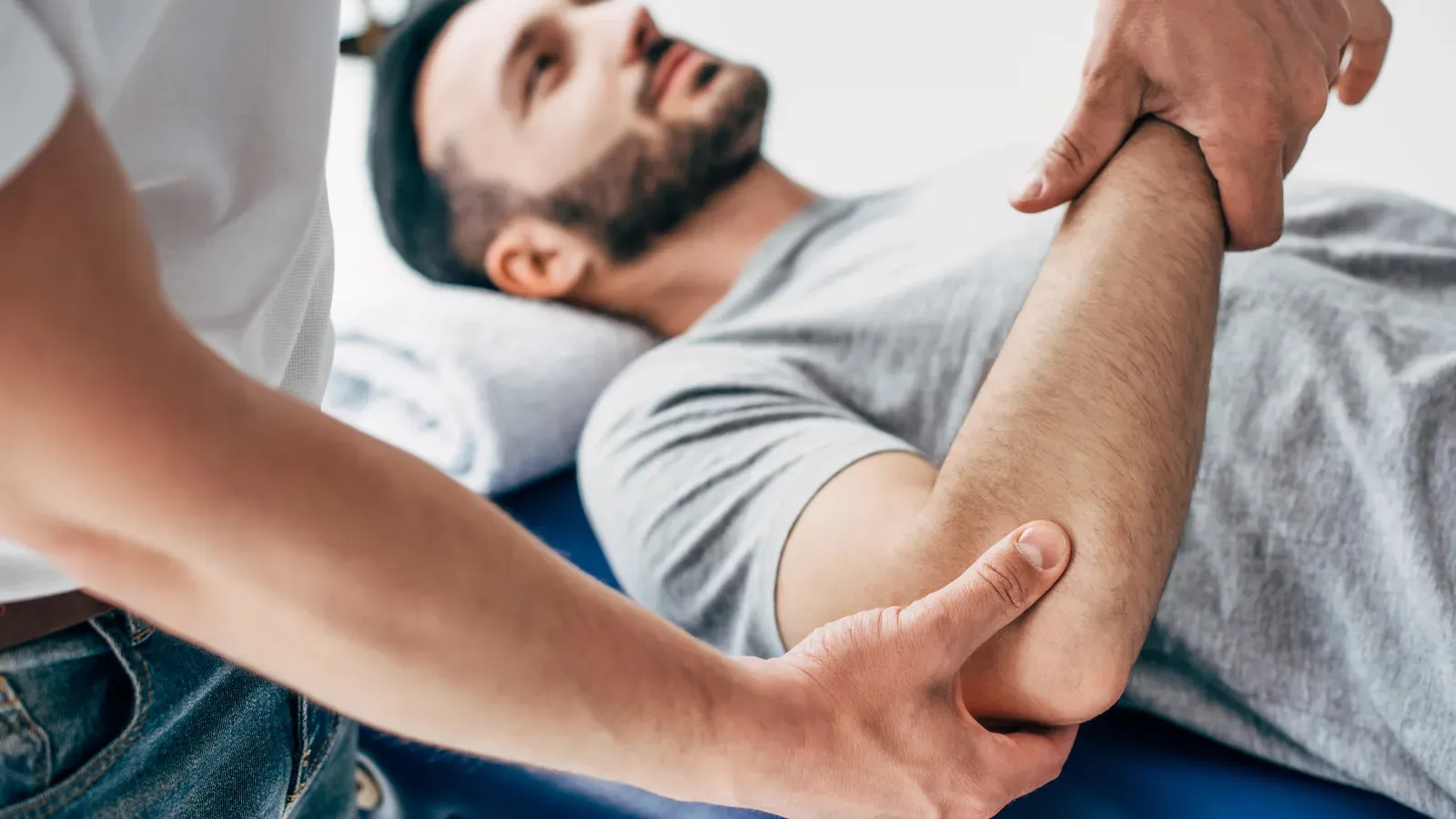
Tennis elbow (lateral epicondylalgia) and golfer’s elbow (medial epicondylalgia) are overuse injuries affecting the tendons that attach to the bony points on the outside and inside of the elbow respectively. Despite their sporting names, both conditions are far more commonly seen in people who’ve never picked up a racquet or golf club, repetitive gripping, typing, manual trades work, and even everyday tasks like carrying shopping bags or using tools can be just as likely a cause.
Both conditions sit within a broader category of tendon overuse injuries called tendinopathy, where the tendon’s structure changes in response to load that’s exceeded its capacity to adapt. This is a gradual process rather than a sudden injury, which is part of why it can take time to resolve fully, even with the right treatment.
What causes tennis elbow and golfer’s elbow
These conditions develop when the tendons attaching to the elbow are asked to do more, or more often, than they’ve adapted to handle, typically through repetitive gripping, lifting, or wrist movements. Common contributing activities include manual trades work, repetitive computer use and typing, racquet sports (for tennis elbow) and golf or throwing sports (for golfer’s elbow), and any activity involving sustained or repeated gripping. A sudden increase in a repetitive activity, a new job, an intensive DIY project, or picking up a new sport, is a common trigger, since the tendon hasn’t had time to build the capacity for the new demand.
Symptoms
Tennis elbow causes pain and tenderness centred on the outside of the elbow, which worsens with gripping, lifting or twisting movements, even simple everyday tasks like shaking hands, turning a doorknob, or lifting a kettle can aggravate it. Golfer’s elbow causes similar pain on the inside of the elbow, often worsened specifically by wrist flexion and gripping combined. Both conditions can cause weakness in grip strength as a secondary effect of the pain, and symptoms are typically gradual in onset rather than appearing suddenly.
When to see a physiotherapist
Most cases of tennis elbow and golfer’s elbow respond well to physiotherapy assessment and treatment without needing imaging. It’s worth seeing Andrew if elbow pain is limiting your grip strength or daily activities, if symptoms have been present for more than a couple of weeks without improving, or if pain is affecting your ability to work. Sudden, severe elbow pain following a specific traumatic event, or elbow pain accompanied by significant swelling, deformity, or an inability to move the joint, is different from typical tendon overuse and warrants a more urgent assessment.
Physiotherapy treatment for tennis elbow and golfer’s elbow
Andrew’s treatment for both conditions combines hands-on and exercise-based approaches, matched to how chronic or acute your presentation is:
- Manual therapy, including deep soft tissue work through the forearm muscles, to reduce tension and improve tissue quality around the affected tendon
- Dry needling for tight, overactive forearm muscles and trigger points that commonly develop alongside these conditions and contribute to ongoing tension on the tendon
- Shockwave therapy, particularly effective for tendon conditions that have become chronic and haven’t responded well to rest and gentle exercise alone
- Exercise rehabilitation, a progressive loading programme, usually involving specific eccentric and isometric strengthening exercises, that rebuilds the tendon’s capacity to tolerate normal grip and lifting demands over time
Andrew will also look closely at what’s driving the overload in your specific case, grip technique, workstation ergonomics, sporting technique, or training load, since this is what determines whether the problem returns once treatment finishes.
What to expect from treatment
There’s no genuine overnight fix for tennis or golfer’s elbow, since tendons adapt to new demands gradually rather than healing quickly like a muscle strain. Most cases take several weeks to a few months to fully resolve with appropriate treatment, and chronic cases that have been present for a long time before starting treatment can take longer still, one reason shockwave therapy is often added for these more stubborn presentations. Hands-on treatment and dry needling typically ease pain relatively quickly, while the progressive loading programme addressing the underlying tendon problem takes longer but is what prevents the issue recurring.
A brace or strap can help reduce load on the tendon during daily activities in the meantime, but it’s a supportive measure alongside treatment rather than a solution on its own.
Preventing recurrence
Because tennis elbow and golfer’s elbow are driven by repetitive overload, addressing the specific activity, technique or ergonomic factor that caused it, not just resolving the current pain, is what keeps it from coming back. Andrew’s review of your grip technique, workstation setup or sporting technique is aimed squarely at this, alongside making sure the strengthening programme is carried through even after pain has settled.
How the physiotherapist treats it
Treatments used for tennis elbow & golfer's elbow
 Manual TherapyManual therapy uses hands-on techniques, soft tissue work, joint mobilisation and trigger point therapy, to ease pain and speed recovery.
 Dry NeedlingDry needling uses thin, sterile needles to release tight, overactive trigger points in muscle, a Western technique distinct from acupuncture.
 Shockwave TherapyShockwave therapy uses focused acoustic pulses to stimulate healing in chronic tendon conditions like Achilles tendinopathy and tennis elbow.
 Exercise RehabilitationA structured, progressive exercise programme tailored to your condition and recovery stage, to rebuild strength and prevent injuries recurring.
Frequently asked questions
What's the fastest way to get rid of tennis elbow?
There's no true overnight fix, since it's an overuse tendon injury that needs time to rebuild capacity. Andrew's treatment combines hands-on techniques like dry needling and trigger point therapy to reduce pain quickly, with a progressive loading programme that addresses the underlying tendon problem so it doesn't return.
Do you need a brace for tennis elbow?
A brace or strap can help reduce load on the tendon and ease symptoms during daily activities, but it's a supportive measure rather than a treatment on its own. Addressing the underlying overload, grip technique, workstation setup or training load, is what actually resolves the problem.
How long does tennis elbow take to heal?
Tennis and golfer's elbow are tendon conditions that typically take several weeks to a few months to fully resolve with appropriate treatment, since tendons adapt gradually. Chronic cases that have been present for a long time can take longer, which is why shockwave therapy is often added for these.
What's the difference between tennis elbow and golfer's elbow?
Tennis elbow (lateral epicondylalgia) affects the tendons on the outside of the elbow, causing pain with gripping and lifting. Golfer's elbow (medial epicondylalgia) affects the tendons on the inside of the elbow, often worsened by wrist flexion. Both are overuse injuries and don't require you to actually play the associated sport.
Can tennis elbow come back after treatment?
It can if the original overload, grip technique, workstation setup or training load, isn't addressed alongside the pain itself. Andrew's programme includes a progressive strengthening component specifically so the tendon can tolerate normal daily and work demands once treatment finishes, reducing the chance of it recurring.
Ready to book your appointment?
Got a question first? Ask Andrew, it's free →