
Our services
Shockwave Therapy
Reviewed by Andrew Macdonald, Senior Physiotherapist , AHPRA registered (PHY0002098797), APA member
What is Shockwave Therapy?
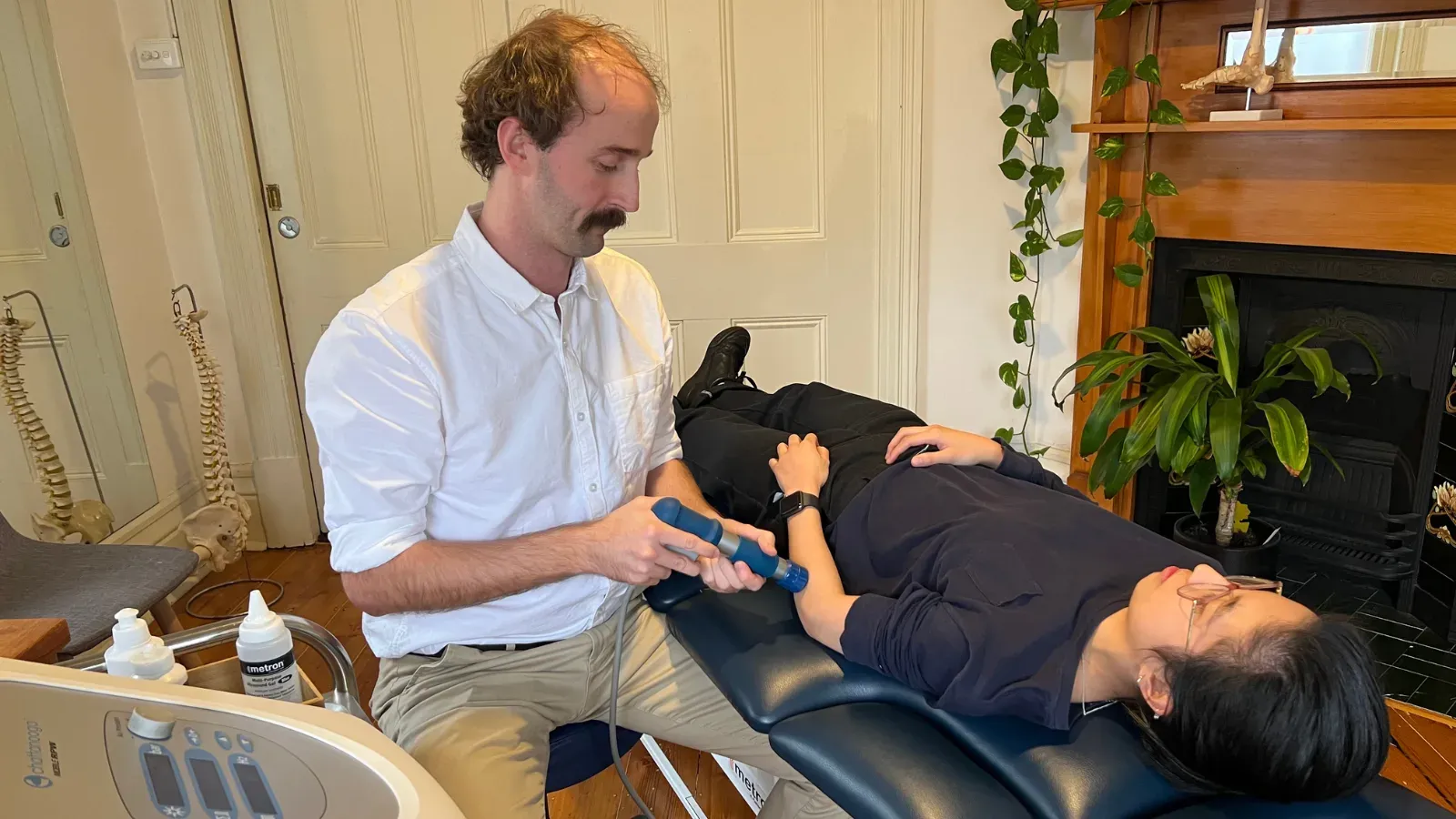
Shockwave therapy, more formally extracorporeal shockwave therapy, or ESWT, delivers focused acoustic pulses through the skin into injured tissue using a handheld device. It’s most established as a treatment for chronic tendon conditions that have become stuck in an ongoing cycle of irritation and incomplete healing, and haven’t fully responded to loading exercises and manual therapy on their own. Andrew typically introduces it once a tendon problem has become genuinely longstanding, rather than as a first-line treatment for a fresh injury.
How It Works
Chronic tendon conditions (tendinopathies) often involve areas of disorganised tissue, reduced blood supply and, in some cases, small calcific deposits that have failed to properly resolve on their own. Shockwave pulses are thought to work through several mechanisms at once: they create controlled microtrauma within the affected tissue, which can prompt the body to restart a healing and repair response that had otherwise stalled; they’re associated with an increase in local blood vessel formation (neovascularisation), improving blood supply to a tendon that’s often relatively poorly vascularised; and in some cases they can help break down small calcific deposits within the tendon. Shockwave also appears to have a pain-relieving effect in its own right, through a mechanism sometimes called hyperstimulation analgesia, where intense sensory input temporarily reduces pain perception in the treated area.
What It Helps With
Shockwave is particularly well-evidenced for chronic tendon and connective tissue conditions, including Achilles tendonitis, plantar fasciitis and heel spur, tennis elbow and golfer’s elbow, rotator cuff injury, and the stiffness and pain associated with frozen shoulder. What these conditions have in common is a chronic, overuse-driven pattern rather than a fresh, acute injury, shockwave is generally reserved for cases that have become persistent despite a reasonable trial of loading exercise and manual therapy, rather than being used for a tendon problem in its early days.
It’s always paired with an ongoing loading exercise programme. Shockwave can help kick-start the tendon’s healing response and reduce pain enough to tolerate loading, but the structural strengthening that gives a lasting result comes from the progressive exercise programme that runs alongside it.
Shockwave Therapy vs Cortisone Injection or Surgery
Shockwave is sometimes confused with a cortisone injection, but the two work very differently. A cortisone injection delivers an anti-inflammatory medication directly into or around the affected tissue via a needle; shockwave uses acoustic pulses delivered through the skin, involves no injected medication, and is aimed at stimulating a genuine repair response in the tendon rather than suppressing inflammation. It’s also entirely non-invasive, unlike surgery, and involves no incision, anaesthetic or recovery time away from normal activity. Because of this, shockwave is often considered as an intermediate option for chronic tendon conditions that haven’t responded to conservative treatment, before more invasive options like surgery are considered.
What to Expect During a Session
Andrew applies a coupling gel to the skin over the affected area, then passes the shockwave device slowly over the region, delivering a series of pulses. This can feel like a sharp tapping sensation or mild discomfort, particularly directly over the most irritated point of the tendon, most people tolerate it well, and the intensity can be adjusted based on how it feels. A session typically takes only a few minutes for the affected area itself, and a course of several sessions, usually spaced about a week apart, is standard.
Aftercare
Some soreness in the treated area for a day or two afterward is common and is a normal response as the tissue reacts to treatment, rather than a sign that anything has gone wrong. Light activity is generally fine, though Andrew will usually advise avoiding intense loading of the treated tendon on the day of treatment itself. Because shockwave works best alongside an ongoing exercise programme, he’ll guide you on how to balance rest and continued loading between sessions.
Is Shockwave Therapy Right for You?
Shockwave is generally very safe, but it isn’t suitable for everyone, and Andrew will screen for this before treating you. It’s generally avoided directly over an acute or unhealed fracture, in pregnancy, in people with a significant bleeding disorder or who are taking blood-thinning medication, directly over major nerves or blood vessels, over areas of known or suspected malignancy, and over the growth plates of children and adolescents whose bones are still developing. It’s also generally avoided for some weeks after a corticosteroid injection into the same area. If any of this applies to you, let Andrew know at your assessment. There are usually still effective alternatives, such as continued manual therapy and a tailored loading programme.
Who it helps
Conditions treated with shockwave therapy
 Frozen ShoulderFrozen shoulder causes progressive stiffness and pain that can take months to resolve. Physiotherapy eases pain and speeds recovery at every stage.
 Rotator Cuff InjuryRotator cuff injuries range from mild tendinopathy to a full tear, causing shoulder pain and weakness. Assessment determines the right treatment path.
 Tennis Elbow & Golfer's ElbowTennis elbow and golfer's elbow are overuse tendon injuries causing elbow pain. Physiotherapy addresses both pain and its underlying cause.
 Plantar FasciitisPlantar fasciitis causes sharp heel pain, often worst with first steps in the morning. Treatment combines hands-on therapy, taping and exercises.
 Achilles TendonitisAchilles tendonitis causes heel pain and stiffness in runners and active people. Physiotherapy uses evidence-based loading protocols to treat it.
 Heel SpurHeel spurs are a bony growth linked to long-term plantar fascia strain. Physiotherapy addresses the underlying cause to relieve heel pain.
Frequently asked questions
What conditions does shockwave therapy treat?
Shockwave is most commonly used for chronic tendon conditions, Achilles tendinopathy, plantar fasciitis, tennis and golfer's elbow, and rotator cuff tendinopathy, particularly when they haven't fully responded to loading exercises and manual therapy alone.
Does shockwave therapy hurt?
It can feel like a sharp tapping or mild discomfort, especially directly over the most irritated point, but most people tolerate it well. Some soreness for a day or two afterward is common and expected as the tissue responds to treatment.
How many shockwave therapy sessions are needed?
A typical course is several sessions, usually spaced about a week apart, though this varies with how chronic and severe the tendon condition is. Andrew will outline an expected course as part of your treatment plan.
How quickly does shockwave therapy work?
Because it's used for chronic, longstanding tendon problems, improvement is usually gradual over the course of treatment rather than immediate. It's paired with an ongoing loading exercise programme, which is equally important for a lasting result.
Is shockwave therapy an alternative to a cortisone injection?
It can be considered as one, particularly for chronic tendon conditions, since shockwave aims to stimulate genuine tissue repair rather than just reduce inflammation. Whether it's the right choice for you depends on your specific condition and history, and Andrew can discuss the options as part of your treatment plan.
Ready to book your appointment?
Got a question first? Ask Andrew, it's free →