
Conditions treated here
Plantar Fasciitis
Reviewed by Andrew Macdonald, Senior Physiotherapist , AHPRA registered (PHY0002098797), APA member
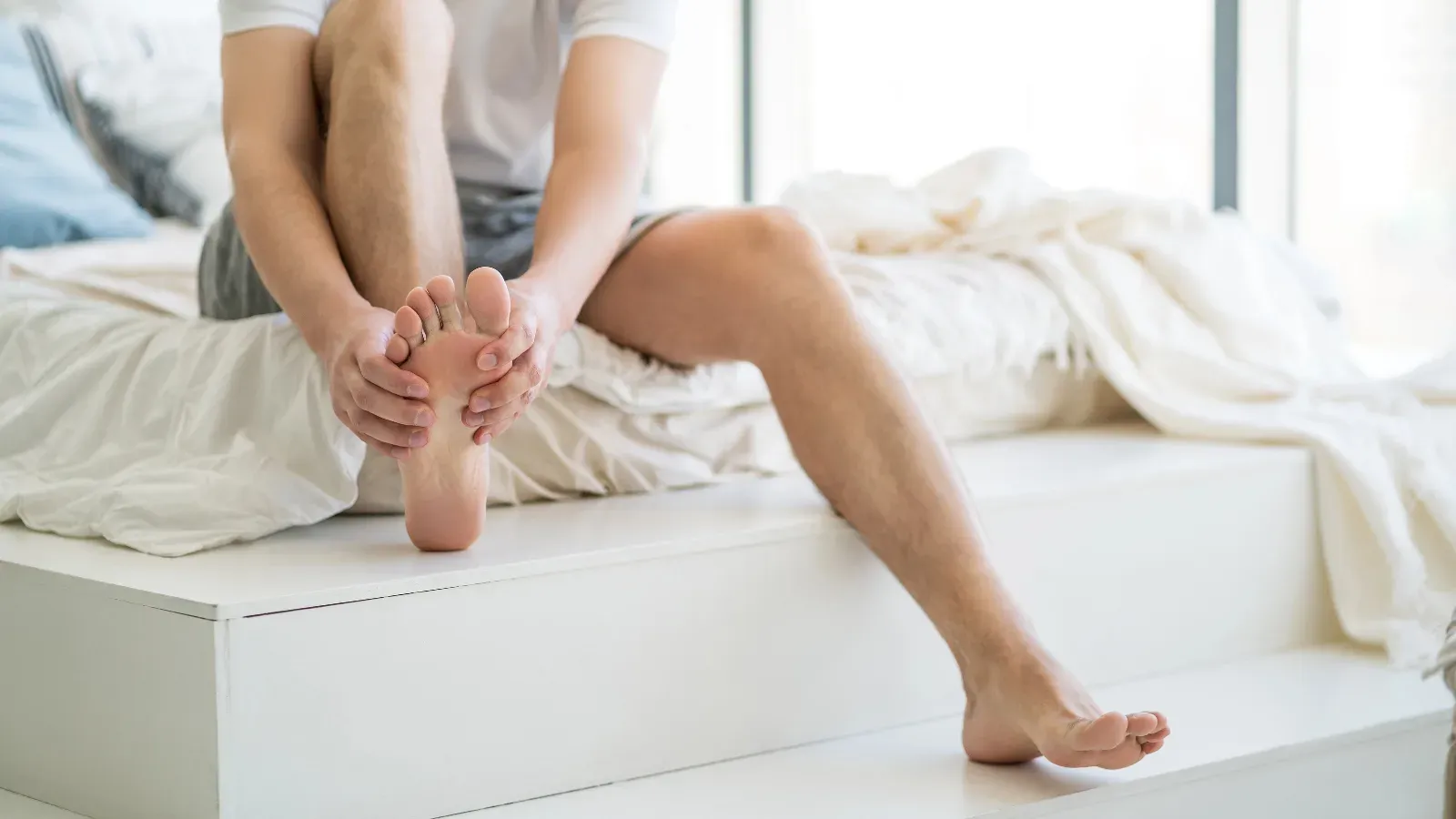
Plantar fasciitis is irritation of the plantar fascia, the thick, fibrous band of tissue that runs along the sole of the foot, connecting the heel bone to the base of the toes and helping support the arch with every step. It’s one of the most common causes of heel pain seen in physiotherapy clinics, affecting runners and largely sedentary people alike, and often develops gradually rather than from a single identifiable injury.
The condition is frequently linked to overuse, tight calf muscles, inappropriate or unsupportive footwear, or a sudden increase in walking or running load, a new training programme, a change of job that involves more time on your feet, or even a change to a harder walking surface can all be enough to trigger it. It’s closely related to, and often occurs alongside, a heel spur, since both conditions share the same underlying strain on the plantar fascia.
What causes plantar fasciitis
The plantar fascia absorbs a significant amount of load every time the foot strikes the ground, and when that load exceeds what the tissue can comfortably tolerate, through sheer volume, sudden increases in activity, or a biomechanical factor that increases tension through the fascia, small-scale irritation and micro-damage develops at the tissue. Tight calf muscles are a particularly common contributor, since reduced ankle flexibility increases tension through the whole chain of tissue along the underside of the foot. Body weight, prolonged standing on hard surfaces, unsupportive footwear, and foot posture, whether flat feet or a high arch, can all influence how much strain the fascia is under day to day.
Symptoms
The hallmark symptom is sharp, stabbing heel pain that’s typically at its worst with the first few steps in the morning or after sitting for a while, a pattern that occurs because the fascia tightens up during rest and is then suddenly stretched with the first steps taken. Pain usually eases somewhat as you continue moving, but tends to return after long periods of standing, walking or running. Some people also notice tenderness when pressing directly on the bottom of the heel, or increased stiffness through the arch of the foot.
When to see a physiotherapist
Plantar fasciitis generally responds well to physiotherapy, and it’s worth seeking assessment reasonably early rather than waiting out months of morning heel pain, since cases that become chronic typically take longer to resolve than those treated in the first few weeks. See Andrew if heel pain isn’t improving despite rest, or is affecting your ability to walk or exercise comfortably. Heel pain accompanied by significant swelling, redness, warmth, or that developed suddenly following a specific injury rather than gradually, warrants a broader assessment before starting a standard treatment programme, as these features can point to a different cause.
Physiotherapy treatment for plantar fasciitis
Treatment is built around a combination of hands-on therapy and a structured loading programme, matched to how irritated the tissue currently is:
- Manual therapy and hands-on soft tissue and trigger point release through the calf and plantar fascia to reduce tension and ease pain
- Dry needling for tight calf and foot muscles contributing to the strain on the plantar fascia
- Shockwave therapy, particularly effective for plantar fasciitis that’s become chronic and hasn’t responded fully to hands-on treatment alone
- Exercise rehabilitation, a calf and foot stretching and strengthening programme addressing the underlying tightness and loading pattern, rather than just easing symptoms
- Taping or strapping to offload the plantar fascia in the early, more painful stage, alongside advice on supportive footwear where biomechanics are contributing
What to expect from treatment
There’s no instant fix for plantar fasciitis, since it involves irritated tissue that needs both time and the right amount of load to settle and rebuild its tolerance. That said, many cases improve significantly within six to twelve weeks of appropriate treatment, though more chronic or longstanding cases can take longer. Andrew will explain where your particular case sits on that spectrum after assessment, and will guide you on the right level of walking and activity to stay on throughout treatment, some activity is usually fine and even helpful, but prolonged standing or walking on hard surfaces can aggravate symptoms in the early stage.
Preventing recurrence
Because plantar fasciitis is often linked to ongoing factors like calf tightness, footwear and activity load, keeping up with the stretching and strengthening programme even after pain resolves, along with sensible footwear choices and gradual increases in walking or running volume, meaningfully reduces the chance of it flaring up again.
How the physiotherapist treats it
Treatments used for plantar fasciitis
 Manual TherapyManual therapy uses hands-on techniques, soft tissue work, joint mobilisation and trigger point therapy, to ease pain and speed recovery.
 Dry NeedlingDry needling uses thin, sterile needles to release tight, overactive trigger points in muscle, a Western technique distinct from acupuncture.
 Shockwave TherapyShockwave therapy uses focused acoustic pulses to stimulate healing in chronic tendon conditions like Achilles tendinopathy and tennis elbow.
 Exercise RehabilitationA structured, progressive exercise programme tailored to your condition and recovery stage, to rebuild strength and prevent injuries recurring.
Frequently asked questions
What is the fastest way to cure plantar fasciitis?
There's no instant cure, since it involves irritated tissue that needs time and the right load to settle. Andrew's treatment combines hands-on soft tissue work, dry needling and taping to ease pain early, with a calf and foot stretching and strengthening programme that addresses the underlying cause.
Is walking bad for plantar fasciitis?
It depends on how irritated the tissue currently is, some walking is usually fine and even helpful, but prolonged standing or walking on hard surfaces can aggravate symptoms in the early, more painful stage. Andrew can advise on the right level of activity for where you're at.
What shoes are best for plantar fasciitis?
Supportive, cushioned footwear that doesn't force the foot into an unnatural position generally helps reduce strain on the plantar fascia. Andrew can advise on footwear as part of your treatment if biomechanics are contributing to your symptoms.
How long does plantar fasciitis take to go away?
Many cases improve significantly within 6 to 12 weeks of appropriate treatment, though more chronic or longstanding cases can take longer. Shockwave therapy is often added for plantar fasciitis that hasn't responded to the initial hands-on treatment and exercise programme.
Ready to book your appointment?
Got a question first? Ask Andrew, it's free →