
Conditions treated here
Groin Strain
Reviewed by Andrew Macdonald, Senior Physiotherapist , AHPRA registered (PHY0002098797), APA member
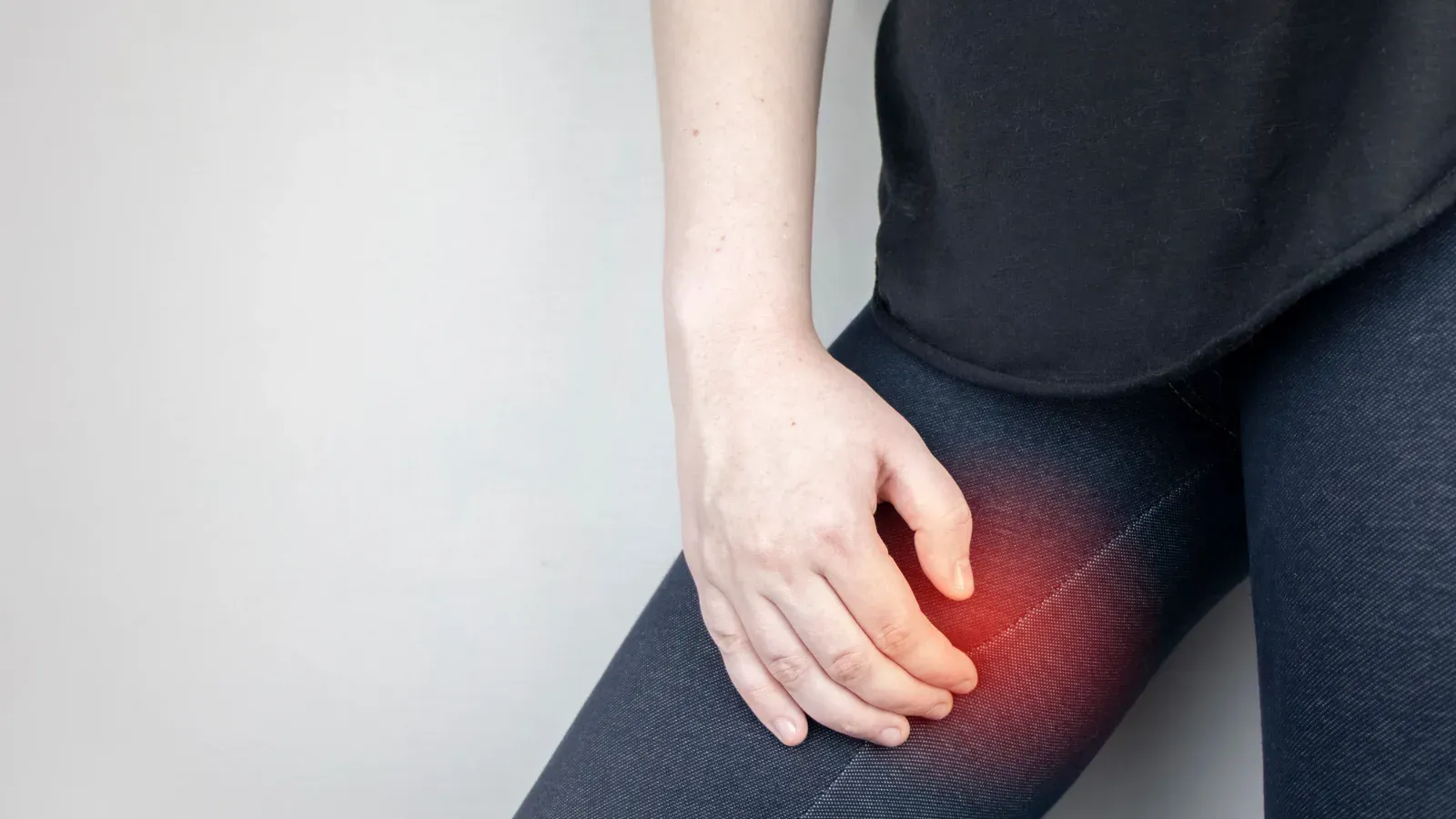
A groin strain is an injury to the adductor muscles, the group of muscles running along the inner thigh whose job is to pull the leg inward and stabilise the pelvis during movement. It’s a common injury in sports involving sprinting, kicking, or rapid changes of direction, with football (soccer and AFL), hockey and running-based field sports among the settings where it’s seen most often. Severity ranges from a mild strain of a few muscle fibres through to a more significant tear.
Groin strains have a reputation for being slow to fully resolve and prone to recurring, and in Andrew’s experience this usually comes down to the same issue: rehabilitation stopping once the pain has settled, rather than continuing through to a full strengthening programme. The adductors need to be genuinely strong enough for the demands of your sport before you return, not just pain-free.
What causes groin strains
Groin strains typically occur during a forceful or sudden adductor contraction, sprinting, a rapid change of direction, or a powerful kicking action are classic mechanisms. Inadequate adductor strength relative to the demands of the sport is one of the most consistently identified risk factors, along with insufficient warm-up, previous groin injury, and a strength imbalance between the adductors and the surrounding hip and core muscles. Because the groin region is anatomically complex, with several muscles, tendons and the hip joint itself all in close proximity, an accurate assessment of exactly which structure is involved matters for getting the treatment right.
Groin strains are graded by severity in a similar way to other muscle strains: a Grade 1 strain involves mild overstretching of a small number of fibres with minimal loss of strength; a Grade 2 strain involves partial tearing, with more noticeable pain, some loss of strength, and often bruising; and a Grade 3 strain is a complete tear, usually causing significant pain and a marked loss of function. The higher the grade, the longer and more gradual the return-to-sport process typically needs to be.
When to see a physiotherapist
Most groin strains can be assessed and managed effectively by a physiotherapist without needing imaging. However, sudden, severe groin or lower abdominal pain, particularly with a visible lump or bulge, needs prompt medical assessment to rule out a hernia, which can feel similar to a muscle strain but is a different condition requiring different management. Pain that’s constant, unrelated to movement, or accompanied by urinary symptoms or fever also warrants medical review rather than assuming it’s a straightforward muscle strain. For typical activity-related groin pain, an earlier assessment still helps identify exactly which structure is affected and how significant the strain is, which shapes how quickly you can safely progress back toward sport.
Physiotherapy treatment for groin strains
Treatment progresses in stages, from calming the initial injury through to rebuilding the strength needed to return to sport confidently. Andrew’s approach typically combines:
- Manual therapy and soft tissue techniques to manage pain and tension in the adductors and surrounding muscles during the early, more acute stage.
- Exercise rehabilitation, a progressive strengthening programme for the adductors and surrounding hip and core muscles, since inadequate adductor strength is one of the biggest risk factors for both first-time and recurrent groin strains. This progresses from gentle isometric work through to more dynamic, sport-specific loading as the muscle’s tolerance improves.
Training through significant groin pain risks worsening the strain, so Andrew will guide what activity is safe in the early stages before building a structured return-to-sport plan as strength and tolerance improve.
What to expect from treatment
Andrew’s assessment identifies which structure is involved and how significant the strain is, before explaining a realistic timeline and building the treatment plan around it. Pain and tenderness often ease within the first couple of weeks for milder strains, but the strengthening programme that follows is what determines whether the groin actually holds up once you’re back to sprinting, kicking or changing direction under match conditions, rushing this stage is one of the most common reasons groin strains become a recurring problem.
Recovery timeline
Mild strains often settle within 2 to 3 weeks, while more significant tears can take 6 weeks or more to rehabilitate fully. Return to sport is guided by objective measures of adductor strength and how the muscle tolerates sport-specific movements like sprinting and change of direction, rather than by pain alone or a fixed number of weeks, since returning before this strength is rebuilt is the most common reason groin strains recur.
Once you’re back to full training and competition, maintaining the adductor strength built through rehabilitation, rather than dropping it from your programme as soon as symptoms resolve, is what keeps a groin strain from becoming a recurring, season-long problem. For sports with a particularly high groin injury rate, ongoing adductor strengthening as a standard part of training, alongside adequate warm-up, is a sensible habit regardless of injury history.
How the physiotherapist treats it
Treatments used for groin strain
 Manual TherapyManual therapy uses hands-on techniques, soft tissue work, joint mobilisation and trigger point therapy, to ease pain and speed recovery.
 Exercise RehabilitationA structured, progressive exercise programme tailored to your condition and recovery stage, to rebuild strength and prevent injuries recurring.
Frequently asked questions
How long does a groin strain take to heal?
Mild strains often settle within 2–3 weeks, while more significant tears can take 6 weeks or more. A full strengthening programme, not just rest, is what determines how well it holds up once you're back to sport.
What causes recurring groin strains?
Most commonly, inadequate adductor strength relative to the demands of your sport, often because rehab stopped once the pain settled rather than continuing through a full strengthening programme.
Can I train through a groin strain?
Training through pain risks worsening the strain. Andrew will guide what activity is safe early on, and build a progressive return-to-sport plan as the muscle's strength and tolerance improves.
Is a groin strain the same as a hernia?
No, though they can feel similar and both cause groin pain. A hernia involves tissue pushing through the abdominal wall and needs medical assessment, while a groin strain is a muscle injury, Andrew's assessment can help distinguish between the two, referring on if a hernia is suspected.
Ready to book your appointment?
Got a question first? Ask Andrew, it's free →