
Resources
The Role of a Physiotherapist
Reviewed by Andrew Macdonald, Senior Physiotherapist , AHPRA registered (PHY0002098797), APA member
Last updated
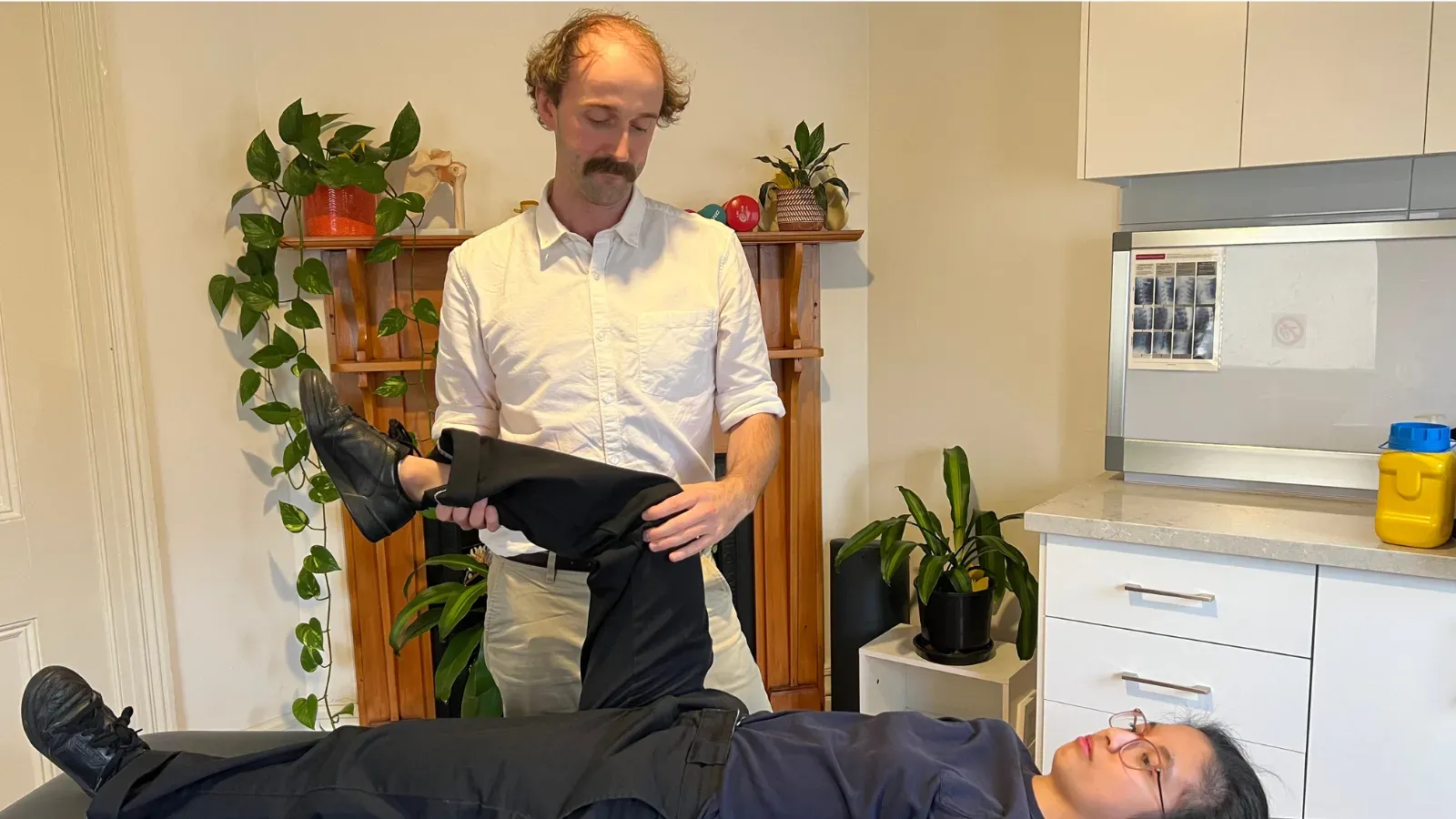
A physiotherapist’s role goes well beyond easing pain in the moment. It starts with assessing how your body actually moves, your posture, joint mobility, movement patterns and strength, to identify where correction is needed. Correct movement and alignment distribute the everyday stresses your body is under (gravity, load, repetitive movement) to the structures designed to cope with them. Once you move away from that ideal alignment, joints and soft tissues such as muscles, tendons and ligaments start to take the strain instead.
Treating the Cause, Not Just the Site of Pain
The body adapts to protect itself as best it can, but over time, usually years, if you exclude sudden impact injuries, those adaptations manifest as pain and reduced movement. This is why most people can’t point to a single, obvious cause for their pain: it built up gradually, from a chain of small compensations.
A physiotherapist’s job is to look past the site of pain and find what’s actually driving it. That’s often an alignment or movement pattern elsewhere in the body that’s no longer serving you well. Treating only the painful spot can bring short-term relief, but the problem tends to resurface unless the underlying cause is addressed too.
Diagnosis, Treatment and Onward Referral
Physiotherapy is direct access. You can book in with Andrew without a GP referral, and he’ll take a full history and physical examination to reach a working diagnosis before treatment begins. Where something falls outside a physiotherapist’s scope, a finding that needs imaging, or a presentation better suited to a GP or specialist, he’ll refer you on rather than continue treating in the dark. For patients on a GP Chronic Condition Management Plan, WorkCover, TAC or DVA claim, this often means working directly alongside your GP or case manager throughout your treatment. See our full guide to claiming for how that works in practice.
Treatment Techniques Used
Techniques commonly used include mobilisation, trigger point therapy and soft tissue massage, dry needling, and ultrasound and shockwave therapy, combined with a progressive, personalised exercise rehabilitation programme. See what is physiotherapy for a fuller breakdown of how these techniques are used.
Education and Prevention
Advice and education are as much a part of a physiotherapist’s role as hands-on treatment. Understanding what caused your injury and how to prevent it recurring is what turns short-term relief into a lasting result, this means guidance on posture, movement habits, and a home exercise programme you stay engaged with between sessions, rather than treatment being something done to you passively.
How Long You Should Continue Care
How long you choose to benefit from physiotherapy is up to you. You may simply want the pain to end, or you may decide that restoring normal movement, alignment and core strength is worth pursuing for the long game, reducing the chance the problem returns. See our conditions treated here for examples of what that looks like in practice.
Frequently asked questions
What is a physiotherapist's role in a patient's recovery?
A physiotherapist assesses how your body moves, identifies the underlying cause of your pain or injury (which is often not the same spot where you feel it), delivers hands-on and exercise-based treatment, and teaches you how to prevent it recurring. You're an active participant throughout, not a passive recipient. Your role is to follow through on the home exercise and advice between sessions.
Do physiotherapists diagnose conditions, or only treat them?
Both. Physiotherapists are direct-access, AHPRA-registered practitioners trained to take a full history, perform a physical examination and arrive at a working diagnosis before treatment starts. If something falls outside their scope, for example, a finding that needs imaging or a specialist opinion, they'll refer you to your GP or the appropriate specialist.
What's the difference between treating pain and treating its cause?
Treating pain alone targets the spot that hurts right now, useful for short-term relief, but the problem tends to return if the underlying driver isn't addressed. Treating the cause means identifying why that area came under excess stress in the first place, often a movement, alignment or strength deficit elsewhere in the body, and correcting that as well, so the improvement lasts.
Does a physiotherapist work with my GP or other specialists?
Yes, where it's needed. Physiotherapy is direct access, so most patients start treatment without a referral, but Andrew will loop in your GP or refer you to a specialist if your presentation needs imaging, a medical opinion, or falls outside a physiotherapist's scope of practice. If you're being treated under a GP Chronic Condition Management Plan, WorkCover, TAC or DVA claim, he'll also liaise directly with your GP or case manager as required.
How long should I continue physiotherapy care?
That's largely up to you and what you're aiming for. Some patients stop once the pain resolves; others continue to build strength, restore full movement and address the alignment issue behind the original problem, since that reduces the chance of it coming back. Andrew will give you his recommendation, but the decision on how far to take it is yours.
Ready to book your appointment?
Got a question first? Ask Andrew, it's free →