
Conditions treated here
Knee Pain
Reviewed by Andrew Macdonald, Senior Physiotherapist , AHPRA registered (PHY0002098797), APA member
Last updated
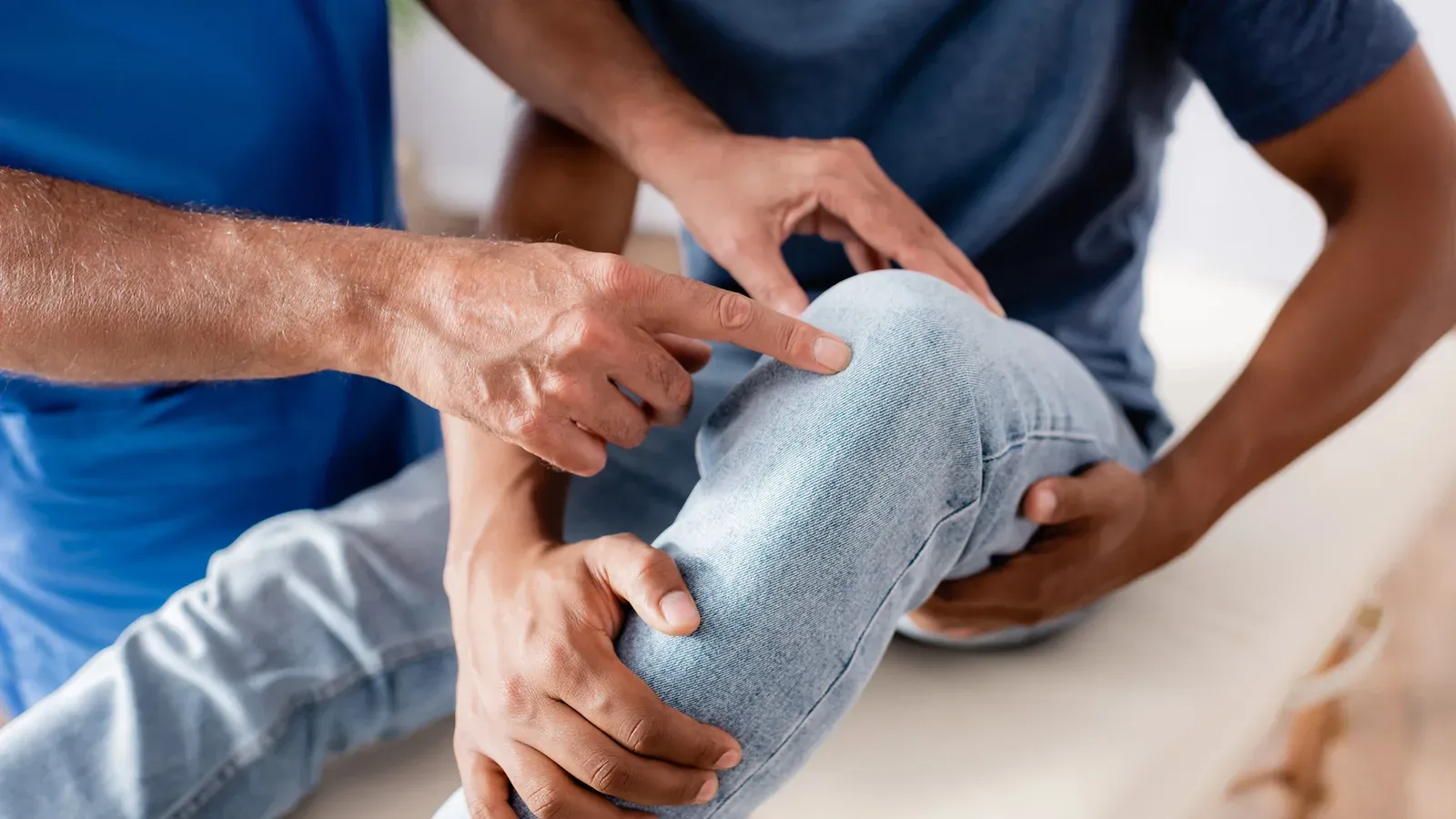
Knee pain is one of the most common reasons people come in, and it’s also one where the specific pattern tells you most. A knee that aches at the front on stairs, one that swells after activity, and one that locks or gives way are different problems, and the assessment is what separates them.
The knee sits between the hip and the ankle and is strongly influenced by both. A great deal of knee pain that has no injury behind it turns out to be about how the joint is being loaded, by the hip above it, the foot below it, or by activity that increased faster than the tissue could adapt.
What causes knee pain
Front-of-knee pain without a specific injury is the most common presentation. It’s typically worse on stairs, hills, squatting and after long periods sitting, and it usually relates to how the kneecap tracks and how much load it’s taking, which hip and thigh strength strongly influence.
Pain with swelling, locking or catching points towards the structures inside the joint, including the meniscus. A knee that gives way, particularly after a twisting injury with a pop and rapid swelling, raises the question of ligament damage such as an ACL injury.
Aching, stiff knees that are worse first thing and after rest are the usual pattern of arthritic change, covered in more detail on our osteoarthritis and rheumatoid arthritis page.
Pain on the outside of the knee in runners and cyclists is frequently ITB syndrome rather than the joint itself.
When to see a physiotherapist
Knee pain that’s lasted more than a week or two, that’s swelling after activity, or that’s changing how you walk is worth assessing. So is any knee that’s stopping you doing something you want to do, since the strength losses that follow a few weeks of avoidance take longer to rebuild than the original problem takes to settle.
Some knee injuries need urgent medical assessment: an inability to bear weight, an obviously deformed knee, rapid and severe swelling within an hour of an injury, or loss of sensation below the knee. If you contact the clinic with any of these, you’ll be told the same thing and helped to get seen.
Physiotherapy treatment for knee pain
Andrew’s assessment tests the knee’s movement and stability, the strength and control of your hip and thigh, and how you load the leg in the activities that hurt. Treatment then usually combines:
- Manual therapy and soft tissue work to restore movement and settle irritated tissue around the joint.
- Exercise rehabilitation, which is the main driver of change in most knee pain, building the strength and control that lets the joint tolerate what you’re asking of it.
- Dry needling where the thigh or calf muscles around the knee are persistently tight and contributing to the load.
- Activity guidance, a structured way back into running, sport or work rather than a guess at when to resume.
What to expect
Andrew will explain what he’s found, which structures are involved, and roughly how the knee should respond over the coming weeks, before treatment starts. Where he thinks imaging or a specialist opinion would change the plan, he’ll provide a detailed letter with his findings and recommendations, including who he believes is best suited, so the next step is straightforward.
Frequently asked questions
Why does the front of my knee hurt going down stairs?
Pain at the front of the knee, worse on stairs, hills and after sitting for a while, is one of the most common knee patterns there is. It usually relates to how the kneecap is being loaded as it moves through its groove, which is influenced by hip and thigh strength and by how quickly your activity has increased. See [runner's knee](/conditions/runners-knee) for the version that shows up in people who run.
Should I rest a sore knee or keep moving?
Complete rest is rarely the answer. Most knee pain settles faster with the right amount of movement rather than none, because the muscles that support the knee lose strength quickly and the joint depends on movement for its own nutrition. What changes is the type and amount, which is what the treatment plan sets.
Does a knee that clicks or grinds mean damage?
Not on its own. Painless clicking and grinding is extremely common and, by itself, doesn't indicate a problem. What matters clinically is pain, swelling, locking, or the knee giving way, which are the things Andrew tests for.
When does knee pain need a scan?
Most knee pain doesn't. Imaging becomes useful where the history and the assessment suggest a structural injury, such as a ligament or meniscal tear, or where the knee isn't responding as expected. Andrew will tell you if he thinks a scan would change the plan, and refer you for one if so.
Ready to book your appointment?
Got a question first? Ask Andrew, it's free →