
Moon boot fitting
Custom-fitted moon boot walkers for faster, safer recovery
A CAM moon boot walker is one of the most common ways to protect a fracture, sprain, tendon injury or post-surgical foot and ankle while it heals. Getting the right boot, in the right size, fitted properly, makes a real difference to comfort and recovery.
Reviewed by Andrew Macdonald, Senior Physiotherapist , AHPRA registered, APA member
What's involved
A moon boot fitting, step by step
01
Assess the injury
Andrew confirms what you're dealing with, fracture, sprain, tendon injury or post-surgical, and how much protection and immobilisation it actually needs.
02
Choose tall or short, and the right size
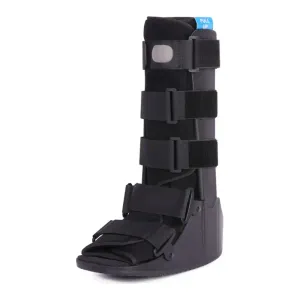
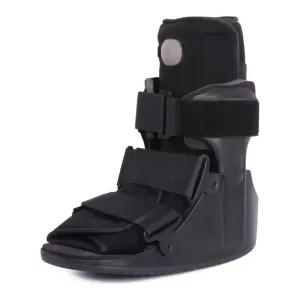
Tall boots cover the lower leg for ankle and higher injuries; short boots suit foot injuries. Andrew measures you against the manufacturer's sizing to get it right first time.
03
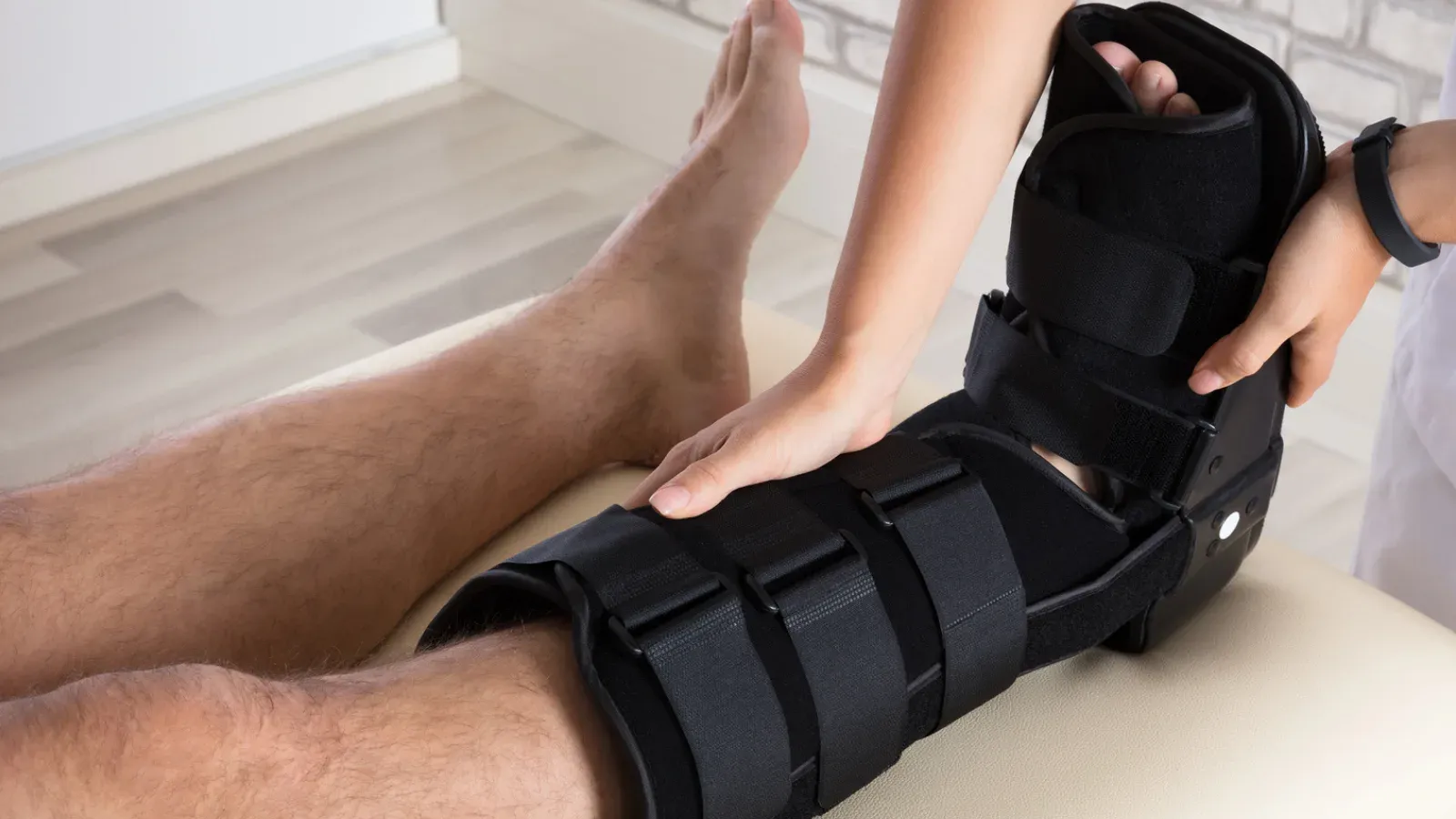
Fit and adjust
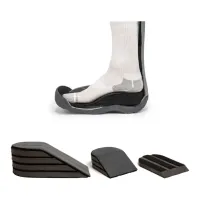
Straps, liner and air-pump compression are set for a snug, secure fit, plus an Achilles wedge if you're recovering from a tendon repair, and Andrew checks your gait walking in it.
04
Plan the recovery
You'll leave knowing how long to wear it, how to manage stairs, driving and sleeping, and when to come back to progress or wean out of it.
The boots we fit
Tall and short CAM walkers
Both feature a non-skid rocker sole and an integrated air pump for adjustable compression. Which one you need depends on your injury, Andrew will confirm this at your fitting.
Accessories
Products that make wearing a boot easier
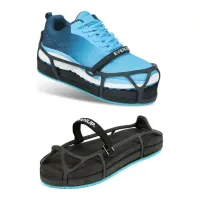
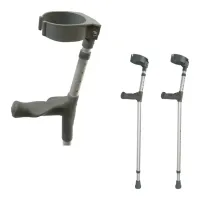
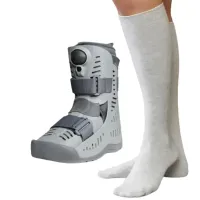
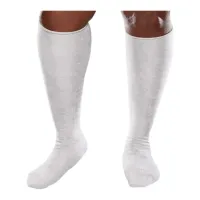
Not sure a boot is what you need?
Ankle braces, sacroiliac and pelvic belts, crutches and shoe raises are all fitted here too, and which one suits comes out of the assessment rather than the catalogue. See braces & supports.
Common reasons for a moon boot
Conditions we commonly fit boots for

Ankle Sprains
Ankle sprains are one of the most common sporting injuries. Physiotherapy restores strength and balance to stop them recurring.

Achilles Tendonitis
Achilles tendonitis causes heel pain and stiffness in runners and active people. Physiotherapy uses evidence-based loading protocols to treat it.

Plantar Fasciitis
Plantar fasciitis causes sharp heel pain, often worst with first steps in the morning. Treatment combines hands-on therapy, taping and exercises.

Heel Spur
Heel spurs are a bony growth linked to long-term plantar fascia strain. Physiotherapy addresses the underlying cause to relieve heel pain.

Pre & Post-Op Recovery
Physiotherapy before and after orthopaedic surgery, knee and hip replacements, ACL reconstruction and shoulder surgery, preparing well and rebuilding strength safely.

Sport Performance & Injury
Modern sports injury rehab favours early, guided movement over rest. Andrew builds a staged recovery plan tailored to your injury and goals.
Frequently asked questions
Do I need a professional fitting, or can I just buy a boot?
You can buy a boot directly, but the size, boot height (tall vs short) and strap tension all affect how well it protects the injury and how comfortable it is to wear for weeks at a time. Andrew will confirm you've got the right boot for your specific diagnosis and fit it properly, rather than guessing from a sizing chart.
How do I know if I need a tall or short boot?
It depends on the injury. Tall boots extend up the lower leg and are generally used for ankle fractures, moderate-to-severe ankle sprains, and Achilles tendon injuries. Short boots suit foot injuries like metatarsal fractures or plantar fasciitis where the ankle doesn't need to be immobilised. Andrew will confirm which is appropriate based on your diagnosis.
How long will I need to wear it?
This varies a lot by injury and how it's healing, anywhere from two to eight weeks is common. Andrew will give you a rough timeframe at your fitting and reassess as you progress, rather than a fixed rule that doesn't account for how you're actually recovering.
Can I drive while wearing a moon boot?
Generally not if it's on your right foot, or on your left foot in an automatic if it affects your ability to react quickly. Check with your insurer too, as some won't cover you while wearing one. Andrew can talk through what's reasonable for your specific situation.
Is it safe to sleep in a moon boot?
Sometimes it's recommended, sometimes not. It depends on the injury and what your surgeon or Andrew has advised. Follow the specific guidance you're given rather than a general rule, since over- or under-immobilising can both slow recovery.
Should I be worried about blood clots (DVT)?
Reduced movement and immobilisation from any boot or cast does carry some increased DVT risk, particularly with additional risk factors like recent surgery, long periods of inactivity, or a personal history of clots. Andrew will flag this at your fitting if it's relevant to you, and simple things like ankle pumps within the boot and staying mobile where possible help reduce the risk. Seek urgent medical attention for calf swelling, pain or redness.
Can I take it off to shower or sleep?
Most CAM boots are designed to be removed for showering and, where advised, for sleeping. That's one of the main advantages over a plaster cast. Andrew will confirm what's appropriate for your injury, since some fractures need more consistent immobilisation than others.
Do you stock sizes in-clinic, or do I need to order ahead?
We keep common sizes in stock and can usually fit you on the spot at your appointment. Call ahead if you'd like us to confirm your size is available before you come in.
Is a moon boot fitting covered by private health or Medicare?
The boot itself is a retail product, but the fitting is usually done as part of a physiotherapy consultation, which HICAPS on-the-spot claiming applies to the same as any other appointment. Check with your fund regarding cover for the equipment itself.
Need a moon boot fitted correctly?
Got a question first? Ask Andrew, it's free →