
Conditions treated here
Fractures
Reviewed by Andrew Macdonald, Senior Physiotherapist , AHPRA registered (PHY0002098797), APA member
Last updated
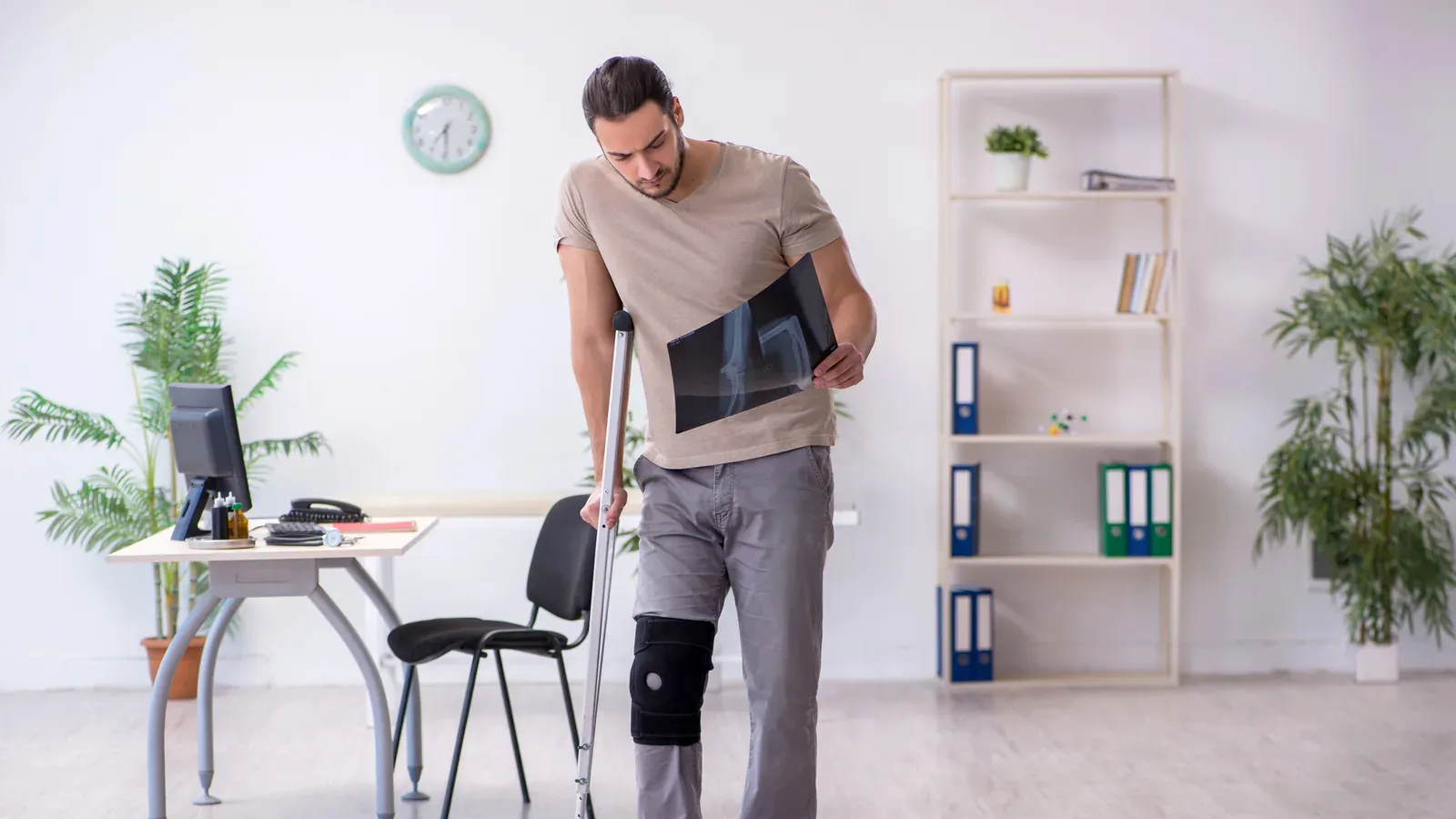
A fracture heals under the care of the doctor or surgeon managing it. What physiotherapy addresses is everything that happens around that, the movement, strength and confidence lost while the bone was protected, and the return to walking, working or playing sport afterwards.
That second half is where most of the lasting difference is made. Bone healing follows its own timeline fairly reliably. The stiffness, weakness and altered movement that build up during those weeks don’t resolve on their own in the same way, and they’re what determines how the limb feels six months later.
What happens to the rest of the limb
Immobilising a bone is necessary and it has predictable effects. Muscles lose size and strength quickly when they’re not being used, noticeably within the first couple of weeks. Joints held still stiffen as the surrounding tissue adapts to a shortened position. Your position sense in that limb becomes less precise, and the way you walk or use the arm changes to protect the area, which starts loading other joints differently.
None of that is damage and most of it is reversible. It does need deliberate work, which is the part that’s easy to underestimate when the fracture itself has healed and been signed off.
When physiotherapy fits in
Rehabilitation often starts well before the bone is fully healed, working within whatever restrictions your treating team has set. There’s usually useful work available on the joints above and below the injury, on the opposite limb, and on general conditioning, all of which reduces how much has to be rebuilt later.
Once you’re cleared to load the area, the focus moves to restoring movement at the affected joints and rebuilding strength through the limb, and then to the specific demands of what you’re returning to.
⚠ A suspected new fracture needs urgent medical assessment and imaging, not a physiotherapy appointment. Severe pain after a fall, an obvious deformity, an inability to bear weight or use the limb, or numbness below the injury all need to be seen now. If you contact the clinic with any of these, you’ll be told the same thing and helped to get seen.
Physiotherapy treatment after a fracture
Andrew’s assessment establishes what movement and strength you currently have, how you’re loading the limb, and what your treating team has cleared, before anything starts. Treatment then usually combines:
- Manual therapy and graded movement work to restore range at the joints that stiffened, introduced within your clearance.
- Exercise rehabilitation, progressive strengthening for the muscles that wasted, and control work to restore position sense in the limb.
- Gait and loading retraining, so the protective limp or guarded movement pattern doesn’t outlast the fracture and start causing problems elsewhere.
- A structured return to the specific things you want to get back to, whether that’s work, walking distance or sport, reassessed rather than assumed.
What to expect
Andrew will explain what stage you’re at, what’s safe to load now, and what the sequence looks like from here, working alongside whatever your surgeon or doctor has specified. Where he needs clarification on your restrictions before progressing, he’ll say so and communicate with your treating team rather than guess.
Frequently asked questions
When should physiotherapy start after a fracture?
Often earlier than people expect. While the bone itself heals under the care of the treating doctor or surgeon, there's usually work that can safely start on the joints above and below, on the other limb, and on general conditioning. Once you're cleared to load the area, rehabilitation moves to the fracture site itself. Andrew works within whatever restrictions your treating team has set.
Why is my joint so stiff after coming out of a cast or boot?
Immobilisation is what allows a bone to heal, but the surrounding tissue responds to being held still by shortening and stiffening, and the muscles lose strength quickly. None of that is damage, and most of it reverses with graded movement and loading. It does take structured work rather than time alone, which is why the weeks after the cast comes off matter as much as the weeks in it.
Do you treat people still in a moon boot?
Yes. A lot can be done while the boot is on, including maintaining movement and strength elsewhere, managing how you're walking so the other hip and knee don't take the strain, and making sure the boot is set up correctly. See our [moon boot walkers](/moon-boot-walkers) page for the boots themselves.
Will my bone be as strong as before?
Healed bone generally regains its strength, and bone responds to loading by remodelling. What determines how the limb performs afterwards is usually the muscle, joint movement and control around it rather than the bone itself, which is exactly what rehabilitation addresses.
Ready to book your appointment?
Got a question first? Ask Andrew, it's free →