
Our services
Cupping Therapy
Reviewed by Andrew Macdonald, Senior Physiotherapist , AHPRA registered (PHY0002098797), APA member
What is Cupping Therapy?
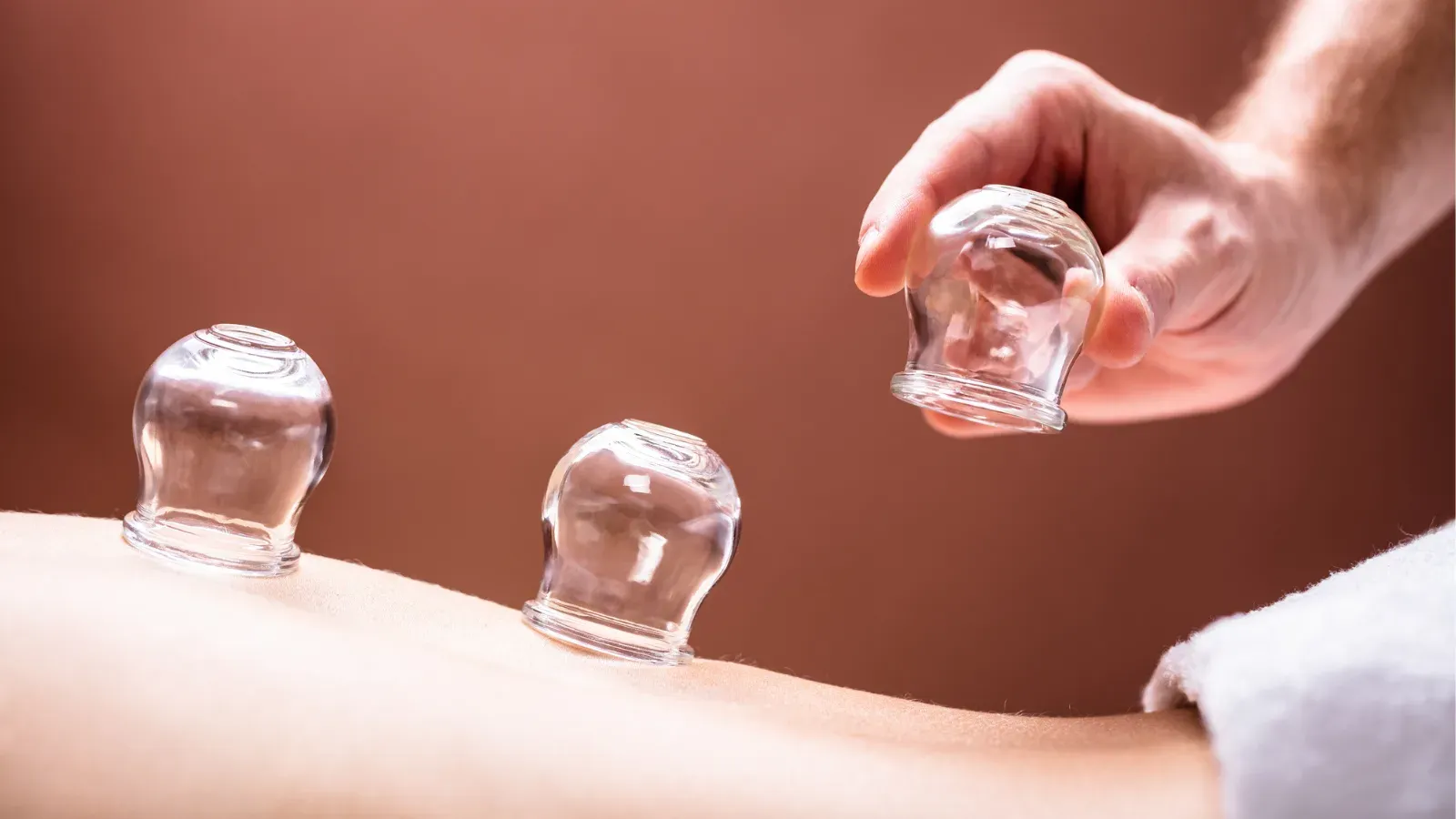
Cupping therapy uses specialised cups, traditionally glass or silicone, placed on the skin to create gentle suction, drawing the underlying skin, muscle and fascia upward into the cup. It works on essentially the opposite principle to most hands-on techniques: rather than compressing tissue with pressure from above, cupping decompresses it, lifting layers of tissue apart from one another. Andrew uses cupping as one component of a broader manual therapy treatment plan, most often for areas of persistent muscle tightness and restricted fascia through the back, shoulders and neck.
How It Works
Muscle and the fascia surrounding it can become tight, thickened or restricted, particularly in areas subject to repetitive load or prolonged poor posture. Most manual techniques address this by pushing into the tissue; cupping instead uses negative pressure to pull it upward and apart. This mechanical decompression can help ease restrictions between layers of fascia, increase local blood flow to the area, and reduce the tightness that comes with chronically shortened tissue.
The suction also draws blood to the surface of the skin, which is what produces cupping’s characteristic circular marks. This localised increase in circulation is thought to support the clearance of metabolic waste products that can build up in tight, poorly perfused tissue, and to encourage a natural healing response in the area.
Cups can be left static in one spot for several minutes, or moved slowly across the skin using a lubricant in a gliding technique, depending on what Andrew is aiming to achieve, static cupping tends to focus on a specific restricted area, while gliding cupping covers a broader region, similar in effect to a deep tissue release.
What It Helps With
Cupping isn’t tied to a single diagnosis; Andrew uses it as a general soft-tissue and recovery adjunct for muscle tightness, restricted fascia and areas of persistent tension, most commonly through the back, shoulders, neck and larger muscle groups such as the calves or thighs. It’s a useful option when tissue feels persistently “stuck” or tight despite other manual therapy, when someone training heavily wants extra support for muscle recovery, or simply as a complementary technique alongside other hands-on treatment for general muscular tension.
Because it addresses tissue tightness rather than a specific diagnosis, cupping is nearly always used alongside other treatment, typically manual therapy, dry needling, and an exercise programme addressing whatever is driving the tightness, rather than as a standalone treatment for a particular condition.
Cupping vs Deep Tissue Massage
Cupping and deep tissue massage both aim to release tight muscle and fascia, but they use opposite mechanical principles to get there. Deep tissue massage applies sustained pressure down into the tissue; cupping applies suction that lifts tissue up and away from the layers beneath it. Some restrictions respond better to one approach than the other, which is why Andrew often uses cupping as a complement to, rather than a replacement for, other manual therapy techniques, matching the technique to what the tissue needs on the day.
What to Expect During a Session
Andrew will first assess the area to confirm cupping is an appropriate technique for what he’s found. Cups are then applied to the skin, usually with a small amount of oil if a gliding technique is being used, and suction is created either with a manual pump or a squeeze-bulb cup. You’ll feel a firm pulling or lifting sensation rather than pain, most people find it comfortable, and some find it quite pleasant, similar to a firm stretch. Cups are typically left in place for a few minutes at a time, or moved slowly over a broader area, before being released.
Aftercare
Temporary circular marks are a normal and expected result of cupping, not a sign of harm. They range from mild pink or red marks to more noticeable purple discolouration depending on how much tension was in the underlying tissue, and typically fade within a few days to a week, similar to how a bruise resolves. The treated area may feel slightly tender for a day or so afterward. Staying hydrated, keeping the area warm, and avoiding direct sun exposure on freshly cupped skin all support recovery. Andrew will let you know if there’s anything specific to watch for based on your treatment area.
Is Cupping Right for You?
Cupping is generally very well tolerated, but it isn’t right for everyone, and Andrew will screen for this before treating you. It’s generally avoided over broken, irritated or sunburnt skin, in people with a bleeding disorder or on blood-thinning medication, over areas of deep vein thrombosis or varicose veins, and in certain areas during pregnancy. People with very thin or fragile skin, or an active skin condition in the treatment area, may also need a modified approach or an alternative technique. If any of this applies to you, mention it at your assessment, manual therapy and dry needling can often achieve a similar release through a different mechanism.
Frequently asked questions
What is cupping therapy used for?
Cupping is used to release tight, restricted fascia and muscle tissue, commonly through the back, shoulders and neck, as part of a broader manual therapy treatment plan, rather than as a standalone treatment.
Does cupping leave marks or bruises?
Yes, temporary circular marks are common and expected. They range from mild redness to more noticeable discolouration depending on how tight the underlying tissue was. They're not harmful and typically fade within a few days to a week.
Is cupping painful?
Most people find cupping comfortable, you'll feel a pulling or suction sensation rather than pain. Any soreness afterward is usually mild and similar to how tissue feels after other manual therapy techniques.
How is cupping different from other manual therapy?
Most manual therapy techniques apply pressure into the tissue, while cupping uses suction to lift and decompress it, a different mechanism that can reach tension in a way pressure-based techniques don't. Andrew uses it alongside other manual therapy rather than in isolation.
Can I have cupping if I bruise easily or I'm on blood thinners?
Cupping is generally avoided or used with extra caution in people on blood-thinning medication, with a bleeding disorder, or who bruise very easily, since the suction draws blood to the surface of the skin. Let Andrew know at your assessment so he can advise on a suitable alternative if needed.
Ready to book your appointment?
Got a question first? Ask Andrew, it's free →